The purpose of KU-UNESCO Chair on Higher Education Development for a Green Economy and Sustainability (HEDGES) is to carry out research activities related to the following OBJECTIVES:
- Establish an interdisciplinary programme at Kenyatta University (KU) focused on understanding and addressing climate change with a focus on action research, innovation, sustainability and green-based economy
- Mainstream green economy principles into KU governance, operations and outreach using whole institution approach for transformation and catalyze behavioral change necessary for a green economy
- Build capacity of KU to foster the development of green economy curriculum and competencies for youth employability as a pathway to transition to green economy and sustainable societies.
- Raise awareness of the green economy agenda through new partnerships and collaborations with other learning institutions, industry, government and civil society
- Collaborate closely with UNESCO and existing UNESCO Chairs on relevant programmes and activities.
Our Projects
Leaders in Higher Education Alliance and Programme for Accelerating Sustainability Transformations (LEAP-FAST)
The Leaders in Higher Education Alliance and Programme for Accelerating Sustainability Transformations (LEAP-FAST) is a global initiative spearheaded by the United Nations Institute for Training and Research (UNITAR) and UNESCO to strengthen leadership and accelerate sustainability transformations within higher education institutions. The programme aims to build a global movement of university leaders capable of embedding sustainability across teaching, research, governance and community engagement to advance the Sustainable Development Goals (SDGs).Programme Structure
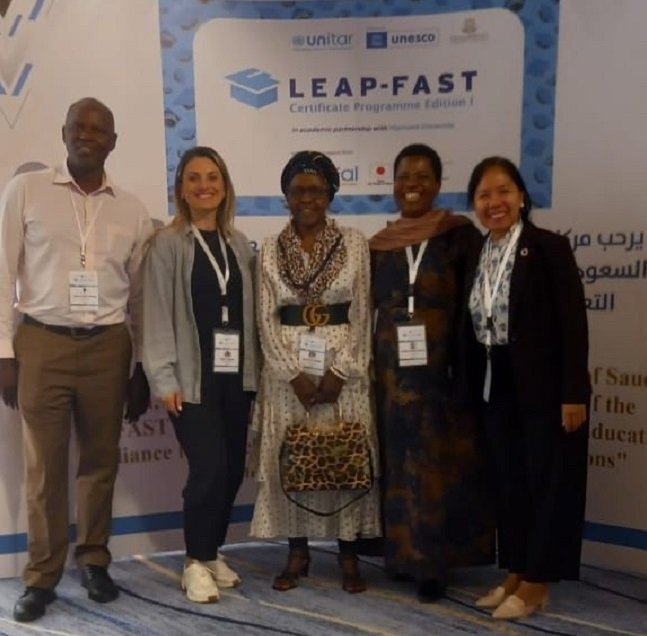
LEAP-FAST operates through a structured certificate programme that brings together academic leaders from 27 Higher Education Institutions worldwide. Participants engage in an immersive learning journey combining self-paced modules, virtual workshops, mentoring, peer learning, and collaborative projects. The programme follows a progressive pathway from institutional transformation to faculty-level innovation and finally to course-level pedagogical change. Participants are expected to develop actionable capstone projects that contribute to sustainability transformation within their institutions.Kenyatta University's Participation
Kenyatta University has actively engaged in the LEAP-FAST initiative through the UNESCO Chair in Higher Education Development for a Green Economy and Sustainability (HEDGES), Dr. Dorcas Beryl Otieno. As a facilitator in the programme, Dr. Otieno contributes to capacity building, interdisciplinary curriculum development, and leadership training aligned with sustainability and green economy transitions.Through this collaboration, Kenyatta University annually nominates senior lecturers to participate in the LEAP-FAST certificate programme. Participants undergo the intensive training and subsequently develop institutional capstone projects aimed at embedding sustainability in teaching, research, and community engagement.Notably, Prof. Maina Mwangi and Dr. Everlyn Wemali from the School of Agriculture and Environmental Sciences; Prof. Peris Onono, Dr. Esther Munyiri from the School of Economics, Business and Tourism have participated in the programme, contributing to sustainability leadership within the university.
Project Impact
The LEAP-FAST initiative continues to strengthen Kenyatta University's role as a leader in transformative education, fostering innovative pedagogies, interdisciplinary collaboration and sustainability-driven research. Through engaging different lecturers annually, the programme builds a growing community of change agents committed to advancing sustainable development through higher education.
Sub-Saharan Africa Teacher Leadership for Education for Sustainable Development (SSATL-ESD)
The Sub-Saharan Africa Teacher Leadership for Education for Sustainable Development (SSATL-ESD) project, implemented at Kenyatta University under the leadership of Dr. Dorcas Otieno OGW, the UNESCO Chair on Higher Education Development for a Green Economy and Sustainability (HEDGES) represents a transformative initiative aimed at strengthening teacher education and advancing sustainability competencies across Sub-Saharan Africa.
Project Overview
The SSATL-ESD project is led by Leuphana University (Germany), it brings together 15 partner institutions from Africa alongside European Partners to address the growing need for teacher leadership in Education for Sustainable Development (ESD). The project focuses on enhancing curriculum innovation, strengthening leadership capacity and promoting collaborative learning approaches to address pressing sustainability challenges such as climate change, inequality, youth unemployment and transitions toward green economies.Progress at Kenyatta University
At Kenyatta University, notable progress has already been achieved. The university Research team conducted a comprehensive baseline survey using the Unit-Based Sustainability Assessment Tool (USAT), engaging internal and external stakeholders to assess existing ESD leadership capacities and identify opportunities for institutional transformation. The findings from this assessment are guiding the development of targeted capacity-building interventions and curriculum improvements.
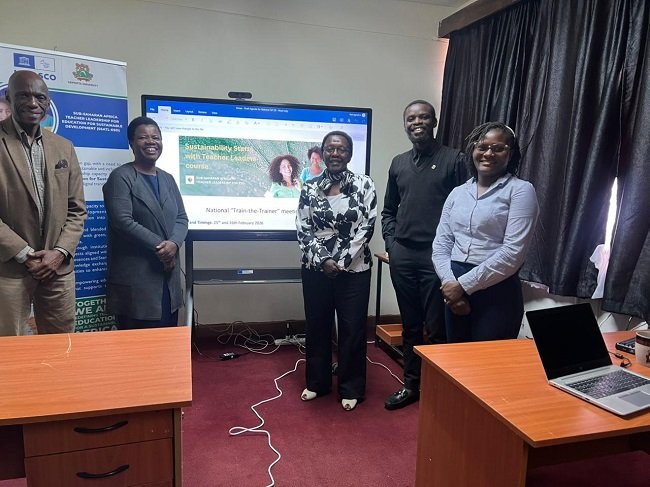
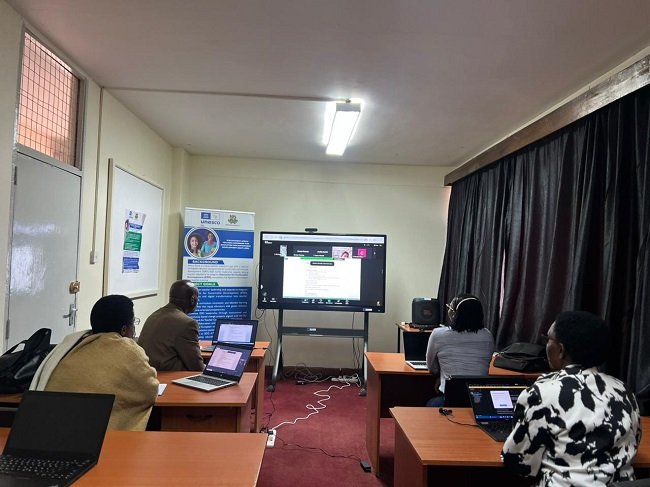
Currently, Kenyatta University team (Dr. Dorcas Otieno, Dr. George Onyango, Dr. Evelyne Wemali and Prof. John Mugubi) have completed the Training-of-Trainers (ToTs) course and developed a Continuous Professional Development (CPD) programme to strengthen teacher leadership and promote transformative learning approaches on ESD within higher education. This effort is establishing the foundation for broader institutional adoption of ESD practices.