
The adoption of the Paris Agreement on Climate Change (COP21), Africa Union Agenda 2063 and the 2030 Agenda for Sustainable Development in 2015 provides major international momentum to advance the inclusive green economy concept and its focus on integrating environmental and social considerations in economic planning and policy making. The principles of an inclusive green economy have been reiterated through the sustainable Development Goals, i.e., Goal 8 which calls for sustained, inclusive and sustainable economic growth, full and productive employment and decent work for all. SDG 7 calls for access to affordable, reliable, sustainable and modern energy for all. SDG 13 also calls for the taking of urgent action to combat climate change and its impacts. This is also in line with the UNESCO priority focus area of climate change and environmental sustainability and greening of TVETs to develop skilled workers who have knowledge of and commitment to sustainable development, as well as the requisite technical knowledge.
In line with SDG 4, the project will work to improve the quality of higher education through enhancing teaching and learning pedagogies to respond to climate change challenges related to energy and agriculture. The proposed project will therefore enable Higher Education Institutions to empower communities to meet inclusive green economy objectives and address the sustainable development challenge. This will be done within the Global Action Programme (GAP) on the Education for Sustainable Development (ESD) framework: transforming learning and training environments by integrating sustainability principles in higher education; building the capacities of educators and trainers for effective delivery of ESD; empowering and mobilizing youth to generate ESD actions and accelerating sustainable solutions at the local level through community-based ESD programmes and local multi-stakeholder ESD networks. The project will use the global partnership approach (SDG 17) in twinning Kenyatta University and other higher institutions of learning as well as other stakeholders with a shared interest in developing practical/action learning solutions to achieve green economy in Kenya share lessons learnt through South-South and North-South networks.
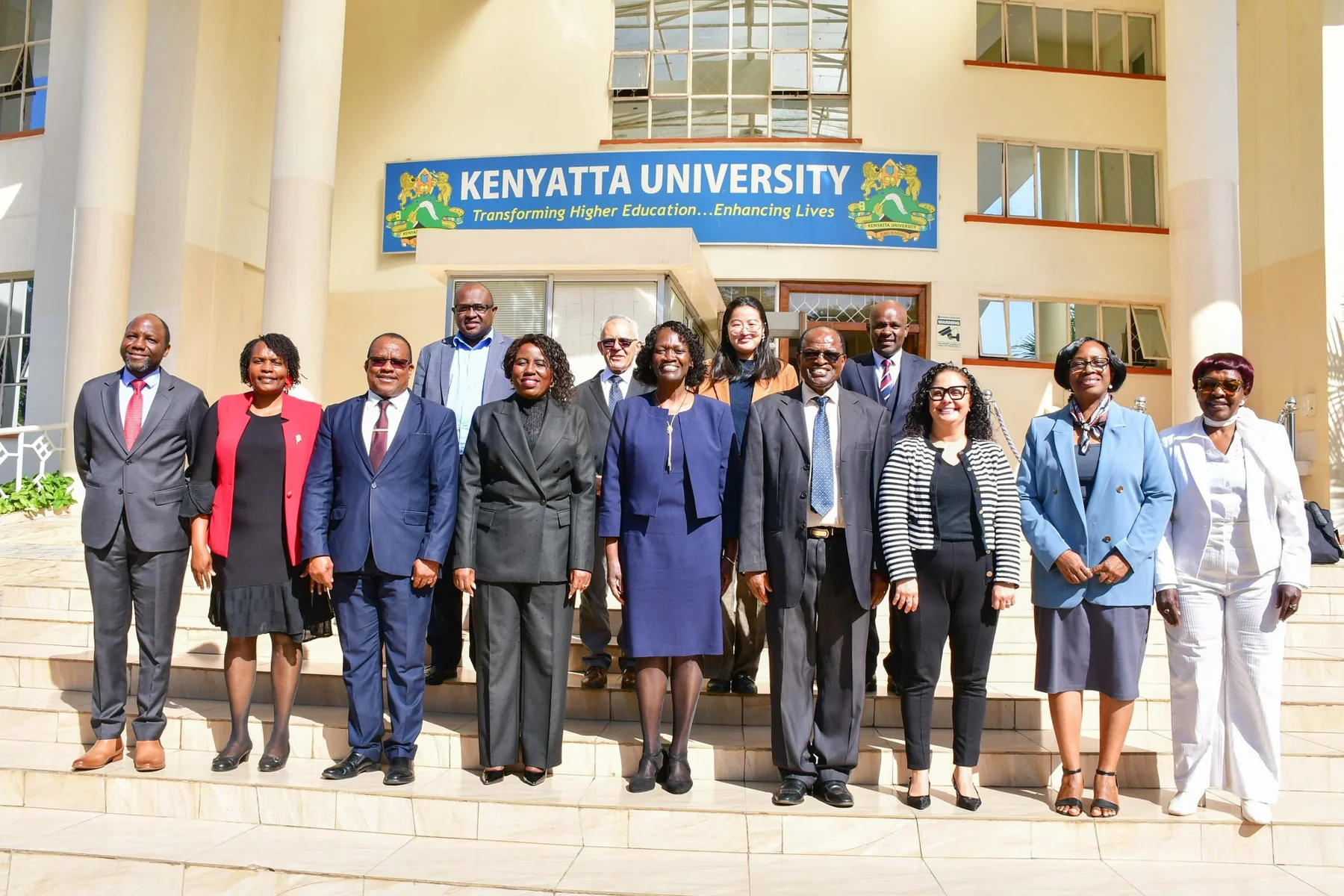
UNESCO CHAIR STEERING COMMITTEE MEMBERS
Prof. Judith Waudo-Chairperson Steering committee/Convener
Prof. John Mugubi-Member, Dean School of Creative and Performing Arts, Film and Media Studies
Dr. James Koske-Member, Dean School of Environmental Studies
Dr. Dorcas B. Otieno-Chair Holder
UNESCO CHAIR HEDGES
Dr. Dorcas B. Otieno OGW-Chair Holder